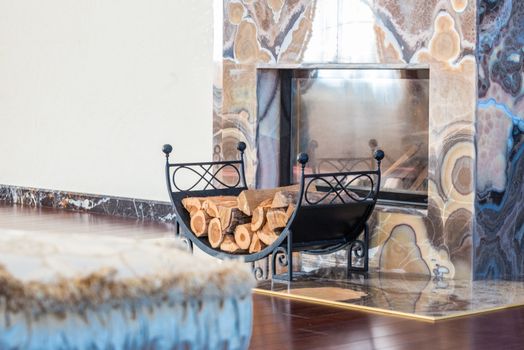
The electric vs gas question comes up constantly in fireplace discussions, and the honest answer is that neither one is universally better. They're different products designed for different priorities. What you actually want from a fireplace determines which one makes sense.
How They Work
A gas fireplace burns natural gas or propane. The combustion produces real heat and real flames, though in a controlled, consistent pattern that's calibrated for the burner design. The heat output is meaningful — a direct-vent gas fireplace can produce 20,000 to 30,000 BTUs, enough to heat a substantial area of the home.
An electric fireplace generates heat through a resistance element, like a space heater — and displays a simulated flame via LED or LCD panels. Most are rated between 400 and 1,500 watts. The visual effect ranges from noticeably artificial to reasonably convincing, depending on the unit and how much you paid for it. The heat output maxes out at roughly 5,000 BTUs, which is supplemental warmth rather than primary heating.
Installation Requirements
This is where the two options differ most significantly for retrofit situations.
An electric fireplace needs an appropriate electrical outlet and a flat wall surface. That's it. No venting, no gas line, no chimney modification. You can install one in a second-floor bedroom, a finished basement, or a room with no exterior wall access. Most homeowners can do a basic electric insert installation themselves.
A gas fireplace requires a gas line, a venting system, and professional installation. Direct-vent units pull outside combustion air and exhaust through a coaxial pipe — the pipe can exit horizontally through an exterior wall, which gives more flexibility than a traditional chimney. But you still need access to an exterior wall within the run limits of the vent system, and a gas line that reaches the installation location. This is contractor territory.
If your home already has an existing fireplace with a chimney, a gas insert is often the most practical conversion — the existing structure provides the vent path.
Heat Output: A Real Difference
If heating a meaningful portion of your home is part of the goal, gas wins by a wide margin.
A direct-vent gas fireplace can produce 15,000 to 40,000 BTUs of usable heat depending on the unit. That's enough to heat a large room or contribute meaningfully to the home's heating load during cold snaps.
An electric fireplace at maximum output produces roughly 5,000 BTUs equivalent. That's enough to make a small room comfortable or take the edge off a medium-sized space, but it's not going to offset your furnace in a meaningful way.
If you're in a California climate zone where winters are genuinely cold — the Sierra foothills, the Bay Area, the Inland Empire — the heat output difference matters. If you're in coastal Southern California and the fireplace is mostly aesthetic with occasional use on cool evenings, the gap matters less.
Operating Costs
Gas fireplaces are generally less expensive to operate per hour of meaningful heat output, particularly in California where natural gas prices vary significantly by region but electricity costs are among the highest in the country.
Electric fireplaces use 1,500 watts at full output. Running one for four hours per day costs more than running a comparably sized gas insert for the same heat output in most California utility rate structures. The gap widens in regions with high time-of-use electricity rates.
The exception is decorative use. If the flame is purely aesthetic and you're not running the heater element, an electric fireplace costs almost nothing to operate.
Maintenance
Electric fireplaces win on maintenance — almost nothing to do. Wipe the glass occasionally, keep the area around the unit clear of dust, and confirm the electrical connection is sound. Annual inspection isn't required by code.
Gas fireplaces require annual inspection per NFPA 211. A technician checks the burner, ignition system, venting, and gas connections annually. It's not a major undertaking, but it's not optional — and it's a recurring cost.
Neither requires the creosote removal that wood-burning fireplaces demand.
Appearance and Flame Quality
Gas fireplaces have a clear advantage in flame realism. A well-designed gas unit with ceramic log media and ember bed lighting is visually convincing in a way that even the best electric units aren't quite — particularly when you're sitting close to it. The flame is real combustion, which has an unpredictability and dimensionality that simulated flame doesn't replicate.
Electric fireplace flame technology has improved significantly in recent years. The gap between entry-level electric units and higher-end models is enormous. A premium electric fireplace with a multi-depth firebox and layered LED effect is considerably more convincing than a budget unit with one light source. But if photorealism matters to you, gas still leads.
Which One Makes Sense for Your Home?
Choose gas if: real heat output matters, you want an authentic flame, you have an existing chimney to work with or exterior wall access for direct venting, and you're comfortable with annual inspection costs.
Choose electric if: you need installation flexibility, you have no gas line access, the fireplace is primarily decorative, you're going in a room where venting is impractical, or you want minimal long-term maintenance.
For existing wood fireplaces that you're converting, a gas insert is almost always the more practical upgrade — you're using the existing structure, adding meaningful heat output, and significantly reducing the maintenance burden compared to wood.
When to Call a Professional
Gas fireplace installation should always be handled by a licensed professional who pulls a permit. The venting, gas connections, and clearance requirements have to be correct — not just for code, but because an incorrectly installed gas appliance creates CO risk that isn't always immediately apparent. If you're considering a conversion from wood to gas, start with a consultation to assess what your existing chimney and gas supply can accommodate.