Creosote is basically the villain of the chimney world. It builds up quietly, you can't always see it, and when enough of it accumulates, it can catch fire inside your flue and burn at temperatures that can crack your liner, damage your home's framing, and in the worst cases, spread to the structure.
It's not rare. Chimney fires are one of the leading causes of residential house fires in the United States, and creosote is the fuel in the vast majority of them.
Where Creosote Comes From
When wood burns, it produces smoke. Smoke is not just visible particles — it's a mixture of water vapor, gases, unburned wood particles, and carbon compounds. As this warm smoke rises through the chimney, it cools. When it cools, the heavier compounds condense and stick to the cooler walls of the flue liner.
That condensate is creosote. Every fire adds a little. The rate of accumulation depends on flue temperature, wood moisture content, burn habits, and how efficient the appliance is.
Stage 1: Easy to Remove
Stage 1 creosote is a loose, flaky, sooty coating on the flue walls. It's mostly carbon dust and is exactly what a standard cleaning removes. If you use your fireplace moderately and get it cleaned annually, this is what your technician is brushing out.
Stage 1 buildup doesn't represent a serious fire hazard on its own. The hazard appears when cleaning is deferred and stage 1 accumulates into something more stubborn.
Stage 2: Gets More Complicated
Stage 2 creosote is harder, more granular, and often described as crunchy or flaky in a heavier way. It forms when the flue runs at lower temperatures — common with smoldering fires, unseasoned wood, or fireplaces with air supply limited by a partially closed damper.
Stage 2 requires more aggressive brushing and sometimes a rotary cleaning system to remove. It's significantly more flammable than stage 1, and at thick enough deposits, it becomes a chimney fire risk.
You can sometimes spot stage 2 creosote yourself. Look just inside the firebox opening with a flashlight. If you see dark, irregular, shiny or hard deposits on the firebox walls just above the damper, you're looking at stage 2.
Stage 3: The Real Danger
Stage 3 creosote is a thick, tar-like glaze. It's shiny, sticky, and extremely difficult to remove — and it burns readily. Chimney fires fueled by stage 3 creosote can reach temperatures exceeding 2,000°F inside the flue — hot enough to crack clay tile liners, warp metal components, and ignite the wood framing around the chimney.
You cannot remove stage 3 creosote with standard brushing alone. It requires chemical application — a product that converts the glaze into a more brittle, removable form — followed by mechanical removal. Some severe cases require multiple treatments.
If a technician discovers stage 3 creosote during an inspection, the chimney should be taken out of service until it's fully cleared.
Why Chimney Logs Are Not the Answer
Creosote sweeping logs — the kind sold at hardware stores — contain chemicals that react with stage 1 and light stage 2 creosote and help break it down. They're not useless. But they're not a substitute for professional cleaning.
The main limitation: they help break the deposits down, but they don't remove what they break down. The crumbled creosote falls into the firebox and the smoke shelf, where it can accumulate and ignite. And they don't address stage 3 buildup at all.
Use them as a supplement between professional cleanings if you burn heavily. Don't use them as a reason to skip the professional service.
When to Call a Professional
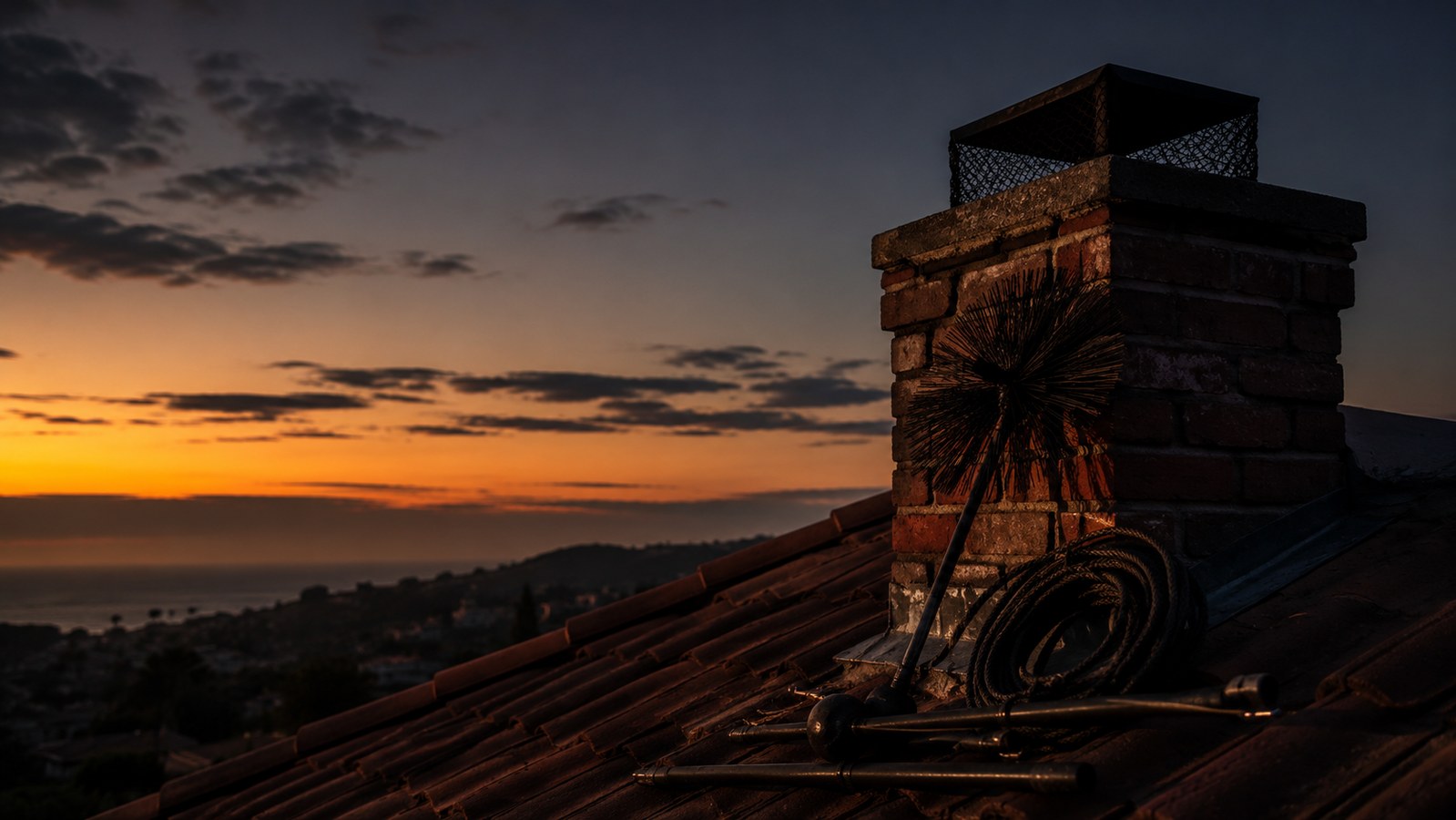
If you're burning wood, book an annual chimney cleaning with a professional chimney sweep. That's the minimum. If you burn heavily or use unseasoned wood, consider twice-yearly cleanings.
If you hear a loud roaring sound coming from your chimney during a fire — louder than normal, like a freight train — stop the fire if it's safe to do so, close the damper, and call immediately. That sound is a chimney fire. It is not always visible from outside, and it can burn for hours inside the flue before anyone notices.