A fireplace that smokes into the house is one of the more frustrating problems homeowners deal with — partly because it's uncomfortable, partly because there are several possible causes and you can't always tell which one you're dealing with without looking inside the flue.
The good news is that most smoke backdraft problems are fixable. The important thing is to stop using the fireplace until you know what's causing it. Smoke contains carbon monoxide, which does not give you warning before it's a problem.
The Most Common Cause: Something Is Blocking the Flue
Animal nesting material is the leading cause of chimney smoke problems that appear suddenly. Squirrels, birds, and raccoons commonly nest in uncapped chimneys, and a nest can partially or fully block the flue. The fire starts normally, but the smoke has nowhere to go and reverses into the room.
Debris — leaves, twigs, a dead animal — can do the same thing. So can a chimney cap that has collapsed or shifted and is now partially obstructing the flue opening.
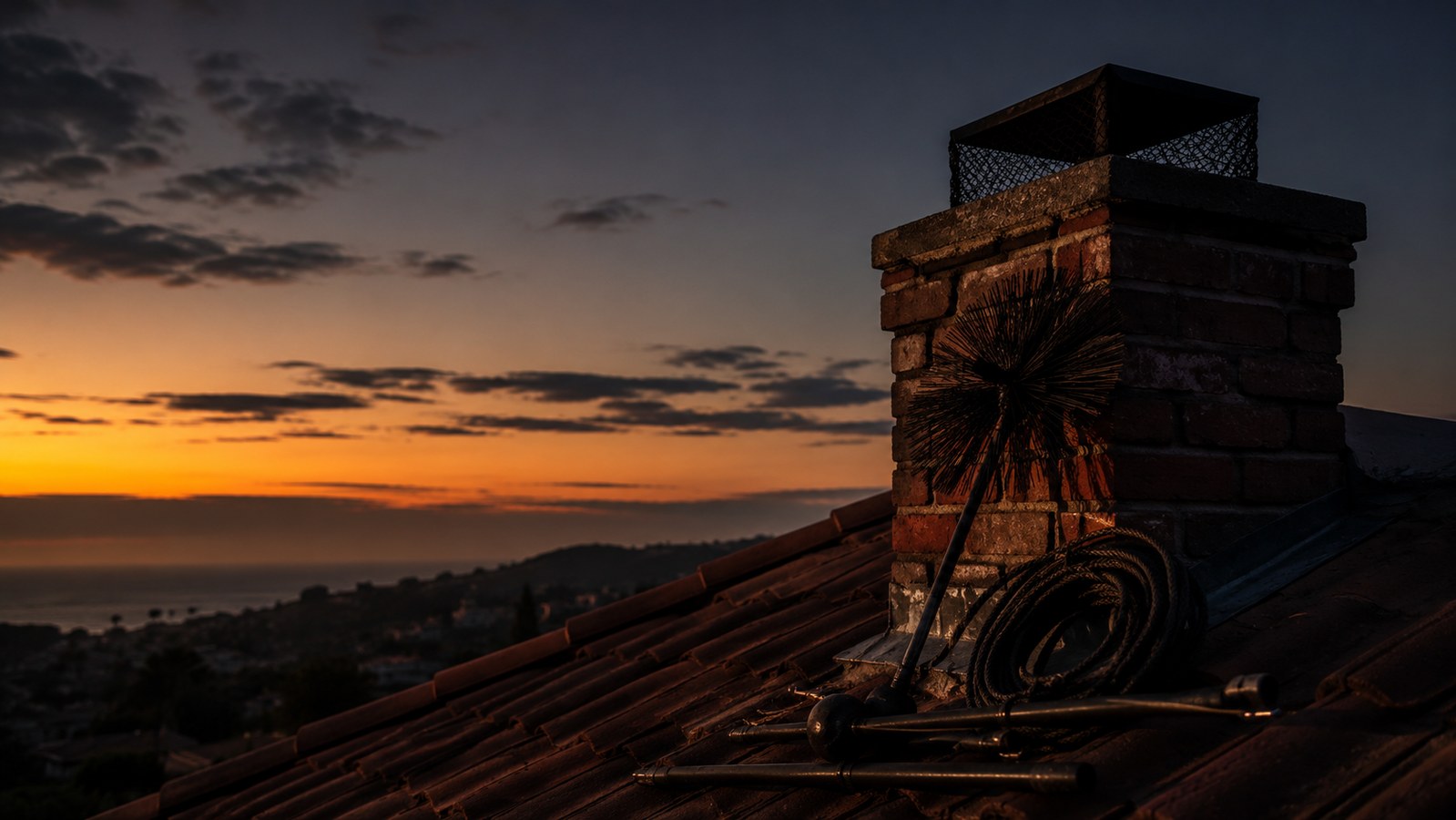
The fix: a professional cleaning and inspection. Once the obstruction is cleared, the draft returns to normal.
Cold Flue Syndrome
This one is less intuitive. A flue that's been sitting cold — especially on a winter morning or after a long period without use — is full of cold, dense air. When you light a fire, the warm smoke rises but hits a column of cold air and gets pushed back down.
You can test for this. Before lighting the fire, hold a lit piece of newspaper near the open damper (not inside the firebox) for a minute or two to warm the flue. If the smoke problem disappears or improves significantly after the flue warms up, cold flue is the culprit.
For chronic cases, a top-mounted damper that seals the chimney at the top — keeping warm air inside the flue — is a practical solution.
A cold flue problem is most common in California homes where the fireplace is used occasionally. The flue never gets warm enough to establish consistent draft.
Wind and Downdraft
In some locations, particularly hilltop homes or properties surrounded by taller structures or trees, wind creates negative pressure at the chimney top that pushes air down the flue instead of allowing it to exit. This is called wind-induced downdraft.
It tends to be intermittent — the fireplace works fine most of the time but smokes on windy days. A chimney cap with a wind-directional design, or simply increasing the height of the chimney, addresses most cases of wind-induced backdraft.
A Damper That Won't Open Fully
The throat damper sits just above the firebox and controls airflow. When it's fully open, smoke rises freely. When it's corroded, warped, or improperly adjusted, it restricts the flue opening and smoke backs up.
A rusted damper plate that doesn't lie flat is a very common finding on chimneys that haven't been serviced in several years. The fix is either adjustment or replacement — both are straightforward repairs.
Negative Air Pressure in the House
Modern tightly-sealed homes sometimes create negative air pressure relative to the outside — meaning air is trying to get IN from anywhere it can. A fireplace flue is a convenient path. The house essentially wants to pull air down the chimney.
This is more common in homes with powerful exhaust fans (range hoods, bathroom exhaust) running while the fireplace is in use. Cracking a window near the fireplace often resolves it immediately. If the problem is persistent, a make-up air kit or a firebox door that seals more tightly may be necessary.
When to Call a Professional
Stop using the fireplace if smoke is entering the living space and you don't know why. Call a trained chimney technician for an inspection. The most dangerous cause — a cracked or collapsed flue tile that allows combustion gases to enter the home through the wall — is invisible without a video camera inspection.
A cleaning alone won't fix a draft problem caused by negative air pressure or improper firebox dimensions. The inspection identifies which fix applies to your situation.