A fireplace smell that's not coming from an active fire is one of those annoyances that homeowners tend to tolerate for longer than they should — partly because it comes and goes, and partly because it seems minor compared to an actual breakdown.
It isn't minor. Most fireplace smells indicate something that needs attention. Here's a guide to the most common ones.
Creosote: The Campfire Smell
If your fireplace smells like a campfire — even when it hasn't been used recently — creosote is almost certainly the cause. Creosote deposits off-gas continuously, but the smell is most noticeable in warm weather or when atmospheric pressure is high. Humid summer days are when California homeowners most often notice the odor.
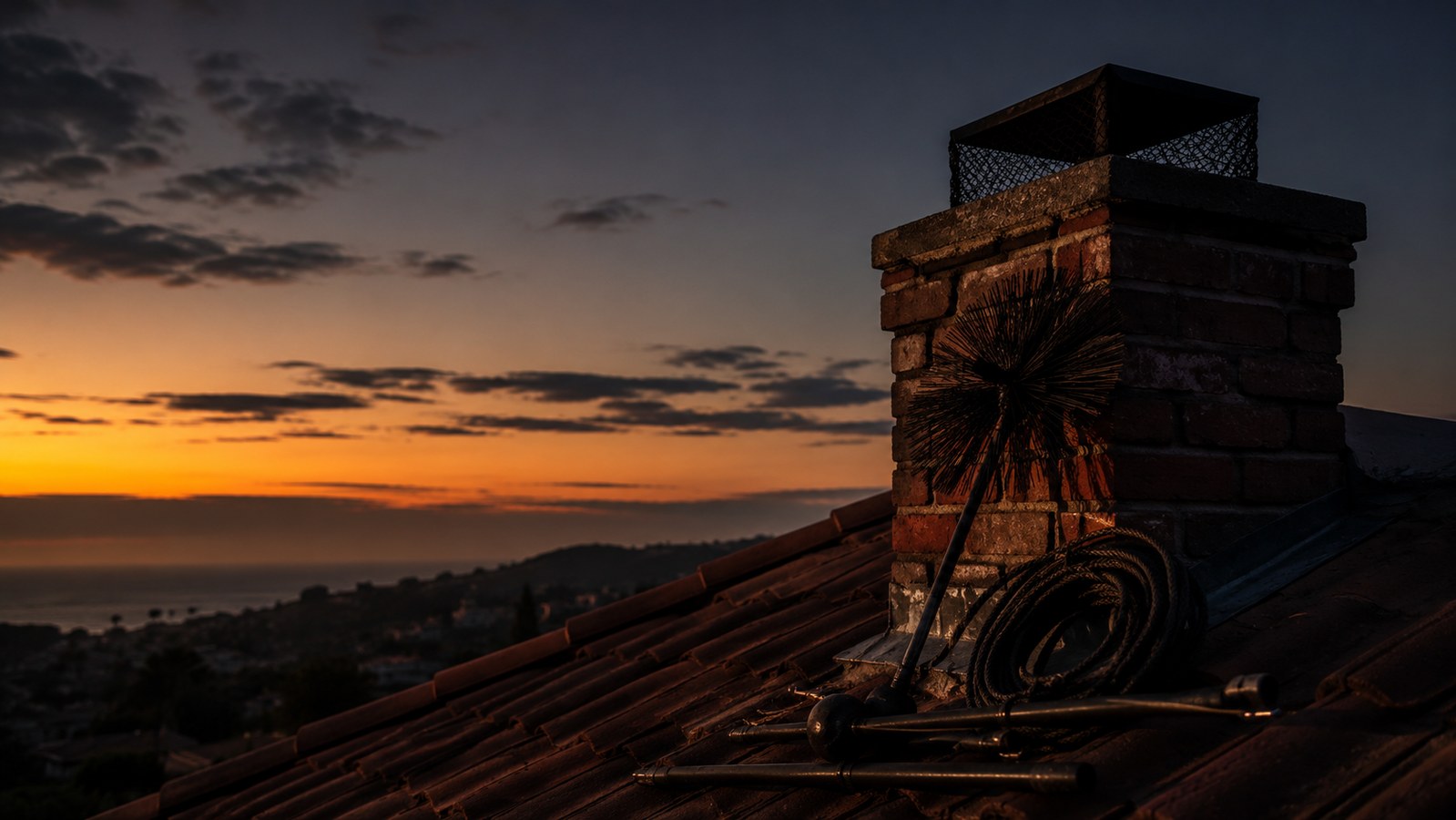
The fix is a professional cleaning. Once the deposits are removed from the flue walls, the smell goes with them. A top-mounted damper that seals the chimney at the top — rather than at the throat — also significantly reduces odor intrusion when the fireplace is not in use.
Animals or Nesting Material
A stronger, more unpleasant smell — something organic and sharp — often means an animal has gotten into the chimney. This could be a living animal, a nest, or unfortunately sometimes a deceased one.
Birds, squirrels, and raccoons regularly enter uncapped chimneys. They bring nesting material that decomposes over time, and the odor can become significant. A thorough inspection and cleaning removes the nesting material and the associated smell.
If you hear scratching or movement sounds from the chimney, the animal is likely still alive. Don't start a fire to 'drive it out.' Contact a wildlife removal service first, then have the chimney cleaned and properly capped.
Chimney swifts — a protected migratory bird — are legally protected while nesting. If a chimney swift nest is present (you'll hear the distinctive clicking sounds), it must be left alone until the birds migrate in fall. Then cap the chimney.
Moisture and Mildew
A musty, damp smell from an unused fireplace typically means moisture is entering the flue — through a damaged cap, failed crown, or cracked masonry. The moisture promotes mildew and mold growth on the firebox walls and smoke shelf, which produces a characteristic musty odor.
This smell is often more noticeable after rain or in humid weather. The fix requires finding and stopping the water entry, then cleaning and drying the affected surfaces.
Negative Air Pressure
Sometimes a fireplace smells because odors from the chimney are being actively pulled into the living space. Modern homes with good insulation can develop negative air pressure — the house effectively depressurizes and tries to pull air in from anywhere it can, including the chimney.
This is different from a standard odor problem because the chimney may be clean. The air pressure differential is what's pulling existing chimney smells into the room. Running exhaust fans, operating range hoods, or having bathroom fans on can create this effect.
A top-mounted damper or chimney balloon inserted into the throat when the fireplace is not in use breaks the connection between the flue and the living space.
Ash and Dust
A stale, dusty smell from a fireplace that hasn't been used in months is often simply accumulated ash and soot in the firebox. Ash absorbs and holds odors well and releases them slowly, particularly in warm or humid conditions.
This is the most benign cause on this list. A firebox cleaning — removing all ash from the floor and smoke shelf — resolves it quickly.
When to Call a Professional
Call if the smell is strong, persistent, or accompanies any visible smoke entering the living space. A professional cleaning handles creosote, ash, and nesting material. If the smell persists after cleaning, the next step is identifying a water entry point or a negative air pressure issue — both of which require an inspection.
Don't use the fireplace if you can't identify the source of an unusual smell. Not all odors are harmless.