The sound is usually described as scratching, fluttering, or rustling — coming from somewhere inside the chimney or firebox. Sometimes it's accompanied by chirping. Occasionally it's accompanied by a smell you'd rather not identify.
Something has moved into your chimney. This is a more common situation than most homeowners realize, and the right response is not to light a fire and see what happens.
What Gets In (and How)
An uncapped chimney is an attractive location for wildlife — it's sheltered from rain and wind, warm from residual heat, and often above predator reach. The most common occupants in California chimneys:
Birds — both chimney swifts (which specifically seek out vertical shafts) and various other species that may nest on the smoke shelf. Swifts are migratory; other birds may be year-round residents depending on the species.
Squirrels — highly motivated climbers that easily reach chimney tops. They bring nesting material (leaves, twigs, insulation they've pulled from somewhere) that can accumulate into a significant obstruction.
Raccoons — particularly female raccoons looking for a denning spot in late winter and spring. Raccoons are larger, produce more noise, and can cause more disruption when they're inside a chimney.
Bats — less common in chimney flues specifically, but they do enter through gaps in the chase cover or cap. Wildlife rules around bats vary by species.
Chimney Swifts: The Protected Guest
Chimney swifts deserve special mention because they come with legal implications most homeowners aren't aware of.
Chimney swifts are small, highly agile migratory birds that historically nested in hollow trees and now rely heavily on chimneys as nesting sites. They're protected under the federal Migratory Bird Treaty Act, which makes it illegal to disturb, remove, or interfere with an active chimney swift nest, its eggs, or the birds themselves.
The practical consequence: if chimney swifts establish a nest in your uncapped chimney before you have a cap installed, you cannot remove the nest until the birds have completed their nesting cycle and migrated south in fall. Nesting season runs roughly April through October in California. During this time, you cannot cap the chimney either — the birds need to be able to fly in and out freely.
Swifts are actually beneficial to have nearby — they consume enormous quantities of insects. But if you'd prefer they nest somewhere else, the solution is simple: cap the chimney in late winter, before they return.
Chimney swifts make a distinctive chattering, clicking sound that's unlike other birds. If you hear this coming from your chimney between spring and fall, assume swifts are present and contact a chimney professional for guidance on timing your cap installation.
What Not to Do
The impulse to 'smoke out' an animal by lighting a fire is understandable and very wrong. For most animals, it doesn't cause them to leave — it causes them to panic and push deeper into the flue, potentially through the damper and into the firebox. Nesting material can ignite. Smoke may enter the living space if the flue is partially obstructed by the animal or nest. And if the animal is already deceased, a fire doesn't address the actual problem.
Don't use the fireplace until you know what's in the chimney and whether the flue is clear. That's the only safe approach.
The Odor Problem
A living animal in the chimney produces some odor — mostly from the nesting material and the animal itself. A deceased animal produces a significantly more unpleasant and persistent odor that can permeate the living space for weeks.
If you suddenly notice a strong, organic smell coming from the fireplace — particularly if you haven't heard any sounds recently — a deceased animal or decomposing nest material is likely. A chimney cleaning and inspection removes the source. Odor-masking products don't address it.
Preventing the Problem
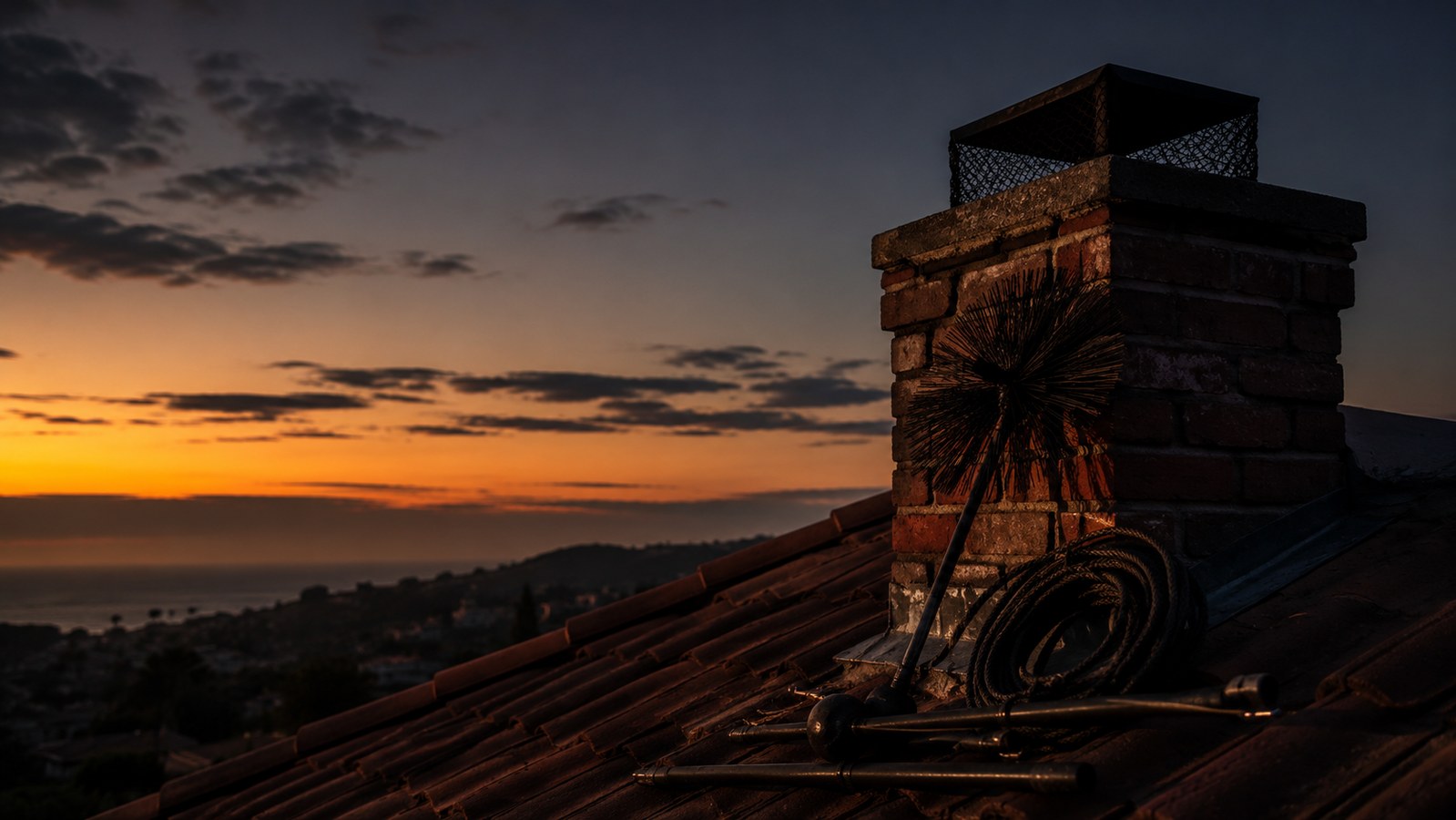
The solution to animals in the chimney is a properly installed, properly maintained chimney cap with an intact mesh screen. A stainless steel cap with 5/8-inch mesh — the NFPA specification — keeps out birds, squirrels, and most wildlife while allowing combustion gases to exit freely.
Inspect the cap annually. The mesh screen is the first component to fail — it corrodes, gets bent in wind, or gets pried by persistent raccoons. An intact cap that's checked every year prevents nearly all wildlife intrusion.
When to Call a Professional
If you hear or smell evidence of an animal in the chimney, don't use the fireplace and call for an inspection. A trained technician can assess whether the flue is clear, what's present, and whether a wildlife removal service is needed before cleaning and capping.
For chimney swift situations, call before taking any action — the legal requirements around nesting birds are specific and the consequences of violating them are real. A professional familiar with local wildlife rules can advise on the appropriate timeline for your situation.