Water is the number-one enemy of chimneys in California, and that's saying something — these structures also deal with earthquakes, wildfire debris, and a century of thermal cycling.
The frustrating part about chimney leaks is that water doesn't always enter where it appears. You might see staining on the living room ceiling two feet from the fireplace, when the actual leak point is at the crown six feet above the roofline. Tracking it down requires knowing where to look.
The Chimney Cap
An uncapped or damaged chimney cap is the most common single point of water entry. Rain falls straight down the flue, saturating the clay tile liner and the firebox masonry below. The liner tiles soak up water, which freezes and expands during cold snaps, cracking the tiles — which then allows combustion gases to escape into the surrounding masonry.
A missing or cracked cap is the cheapest fix on this list — a single low-cost fix that needs little more than an annual check afterwards.
The Chimney Crown
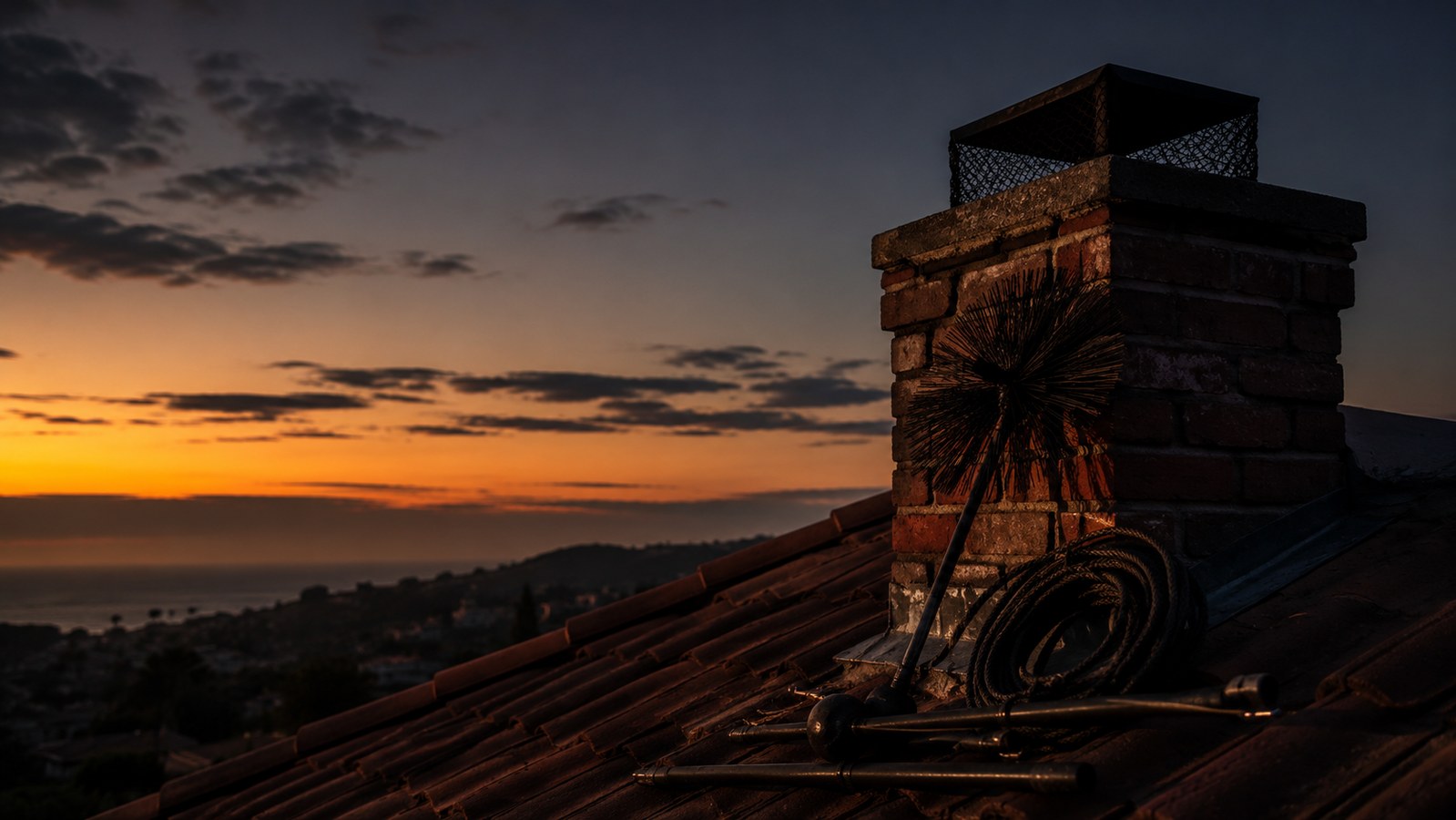
The crown is the concrete or mortar cap that covers the top of the chimney — the space between the flue liner and the outer edge of the chimney. It's supposed to slope downward and direct water away from the flue. When it cracks or deteriorates, it channels water directly into the masonry.
Crown cracks are often not visible from ground level. They show up during a rooftop inspection or when a technician is on the chimney. A properly built crown — sloped, with at least a 2-inch overhang on all sides — sheds water far better and lasts much longer than a flat, undersized one.
Many older California homes have crowns that are flat or nearly flat. These are not code-compliant and will allow water infiltration. If your chimney was built before 1990 and has never had the crown assessed, have it checked.
Flashing — The Most Common Culprit
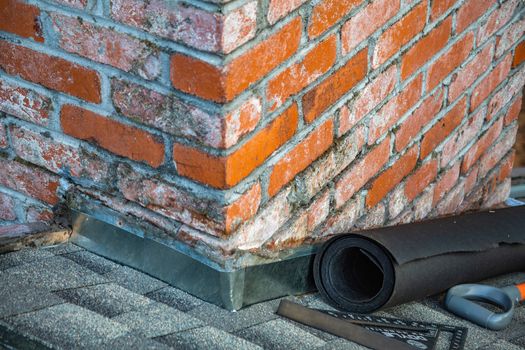
Flashing is the metal seal between the chimney and the roof. It consists of step flashing (woven into the roof shingles along the sides of the chimney) and counter flashing (embedded in the chimney mortar and lapped over the step flashing). When properly installed, it creates a watertight seal that flexes slightly as the chimney and roof move independently.
Flashing fails most often at the sealant joints — the caulk or mortar that bridges the metal to the masonry. As sealant ages, it cracks and shrinks, allowing water to run behind the flashing and into the wall cavity.
Flashing problems are the most common source of water stains on ceilings near the chimney. The water enters at the roofline but travels down the wall cavity before becoming visible — which is why the stain is rarely right at the chimney.
Cracked or Porous Masonry
Brick is not naturally waterproof. Over time, it becomes more porous as the surface weathers, and mortar joints that have deteriorated allow water to enter the body of the chimney directly. This is especially true of older California chimneys that have gone years without tuckpointing.
A vapor-permeable masonry sealer applied to sound, properly tuckpointed brick dramatically reduces water absorption. The key word is 'vapor-permeable' — a sealer that traps moisture inside is worse than no sealer at all.
The Chase Cover (Prefabricated Chimneys)
Prefabricated, factory-built fireplaces are wrapped in a wood-framed chase covered by a thin metal chase cover at the top. That cover rusts out over time — typically within 10 to 20 years — and when it does, water pours into the wood framing of the chase. Left long enough, this causes rot, mold, and structural damage to the chase itself.
Replacing a rusted chase cover is a straightforward repair. Replacing a chase full of rot is not.
Why You Shouldn't Ignore It
Water infiltration is a slow disaster. Minor leaks saturate mortar joints and liner tiles over months and years, gradually expanding damage. The freeze-thaw cycle accelerates it. A cracked liner caught early is a manageable repair. A collapsed liner is a full reline. Failed flashing fixed promptly is a simple service call. Left alone for several wet seasons, the same problem becomes a wall remediation job.
The smallest water repairs are the most affordable. Schedule them before winter — not after.
When to Call a Professional
If you see any signs of water in or around your chimney — efflorescence, firebox moisture, ceiling staining, rust — call for an inspection before the next rain season. The technician can usually identify the entry point during a rooftop assessment. If it's not immediately obvious, a targeted water test (controlled water application to different zones of the chimney) narrows it down.