Chimneys don't send dramatic warning signals. They don't beep at you. There's no check-engine light. They just quietly deteriorate in ways that are invisible from the living room — until the damage is severe enough to make itself known, at which point the repair bill is considerably larger than it would have been.
Here's what to look for when you inspect your chimney from ground level and during your annual service.
White Staining on the Brick (Efflorescence)
White chalky deposits on chimney brick are called efflorescence — mineral salts left behind when water passes through the masonry and evaporates on the surface. It looks harmless. It isn't.
Efflorescence means water is moving through your chimney wall. That's the real problem. The white staining is just evidence. If you see it, your mortar joints, crown, or cap are allowing water in, and that water is saturating the masonry and potentially the structure behind it.
Crumbling or Missing Mortar Joints
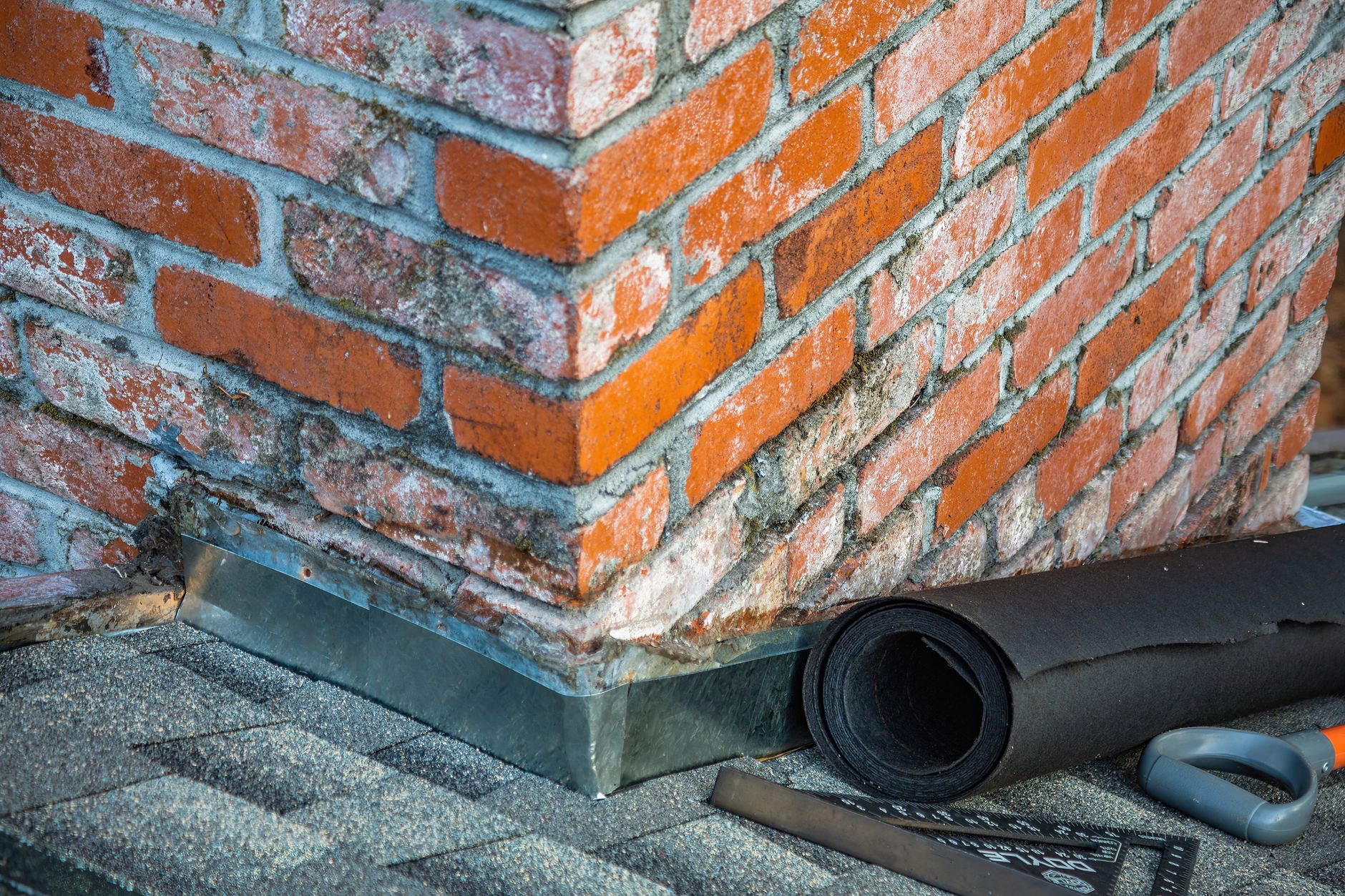
Mortar joints are the narrow bands of mortar between each brick. They are designed to be the sacrificial component — softer than the brick, so they absorb freeze-thaw stress and deteriorate before the brick does. This is by design. But once the mortar fails, the brick is exposed.
Look for joints that appear recessed, powdery, cracked, or missing entirely. The standard repair is tuckpointing: grinding the old mortar out to 3/4 inch depth and packing in new Type S mortar matched to the existing profile. Done correctly, this extends the chimney's life by decades.
Cracks in the Chimney Crown
The crown is the concrete or mortar cap that sits on top of the chimney and seals the space between the flue liner and the outside edge of the chimney. It's supposed to shed water away from the liner. When it cracks, it does the opposite — it channels water directly down the flue and into the masonry below.
You can sometimes see crown cracks from ground level with binoculars. More often they're spotted during a roof inspection or chimney service. A cracked crown that's caught early can be patched. A crown that's been allowing water in for several seasons may need full replacement.
A properly built crown extends at least 2 inches past the chimney face on all sides and has a slight downward slope to shed water. Any crown sitting flush with the chimney top is undersized and will fail sooner.
Rust Stains on the Cap, Chase Cover, or Inside the Firebox
Rust comes from metal components — the damper plate, the cap, the chase cover on prefabricated fireplaces. Orange-brown staining dripping down from the cap area indicates the metal is corroding, which typically means water is getting past the crown and sitting on the metal.
Inside the firebox, rust on the damper frame or firebox walls is a sign the damper is not sealing properly and moisture is entering the flue. A rusted damper usually doesn't close fully, which means your conditioned air escapes up the chimney when the fireplace is not in use.
Spalled or Damaged Brick
Spalling is when brick faces pop or flake off. It happens when water saturates the brick, freezes, and expands — physically pushing the face of the brick away from the body. Spalled bricks look rough and pitted compared to the smooth face they started with.
In Southern California, freeze-thaw spalling is less common than in the Sierra foothills — but saturated brick still deteriorates from moisture cycling. Spalled bricks need replacement, not patching. Surface sealers applied over spalled brick trap moisture and accelerate the damage.
Smoke Backing Into the House
When smoke consistently comes back into the living space during a fire, there's usually a draft problem — but draft problems are sometimes caused by structural issues. A partially collapsed flue tile, a heavily obstructed liner, or a completely sealed damper due to rust can all produce backdrafting. So can animal nesting material.
If cleaning doesn't fix a smoke problem, a video inspection of the flue is the next step.
Water in the Firebox
Standing water or consistent moisture in the firebox is never normal. It means water is entering the flue — through the cap, crown, cracked liner, or failed flashing — and running down to the bottom. This is the fastest way to destroy a firebox: wet brick, combined with the thermal stress of burning, cracks quickly.
Don't use a fireplace with water in it. Find the source of infiltration first.
When to Call a Professional
If you see any of the above signs, call before the next burning season. Most chimney masonry damage gets worse — not better — with time and weather. A mason who catches crumbling mortar in spring can fix it in a few hours. That same mason returning two years later, after a couple of wet winters, may be looking at a partial rebuild.
We will tell you honestly if the damage is minor and you have time, or if it's urgent. Not every defect is an emergency. But ignoring a legitimate one almost always makes it one.